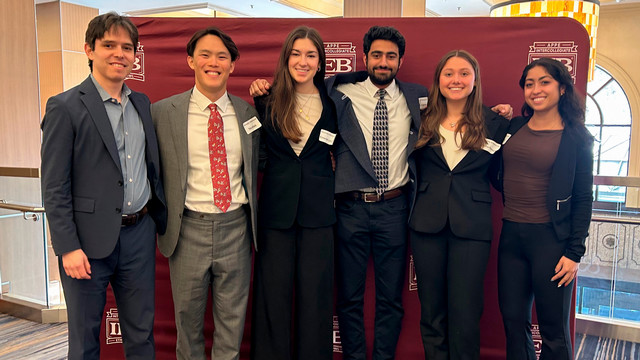
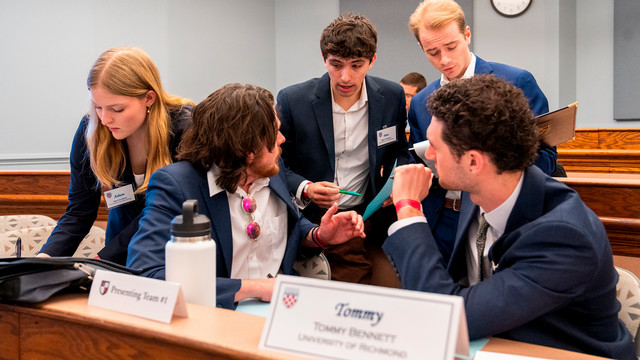
Competing in national ethics bowl is a win-win for University of Richmond team
Spiders rank among top 7% of college teams nationwide after participating in intercollegiate ethics bowls.

The 2025-26 Jepson Leadership Forum, Game Changers: Rethinking Leadership in Sports, addresses the significance of sports in American life. We will explore sports in the contexts of ethical and effective leadership, cultural significance, the impact of analytics, and recent changes to the guidelines governing college and professional sports. Speakers will discuss these topics from a variety of perspectives, drawing on their personal experiences, academic research, and industry expertise.

At the Jepson School of Leadership Studies, leadership is more than a subject — it’s a lived experience. The 2024–25 Dean’s Report celebrates how our students, faculty, and alumni bring leadership to life through challenging academic work, hands-on research, real-world experiences, and global engagement.

Jepson faculty help students hone their leadership skills. They also hold prominent places in national and international media, providing insightful opinions and expert views on leadership and issues of the day.

Graduates leave Richmond with knowledge of leadership frameworks and with the critical thinking and communication skills that enable them to excel in their chosen careers.
Spiders rank among top 7% of college teams nationwide after participating in intercollegiate ethics bowls.

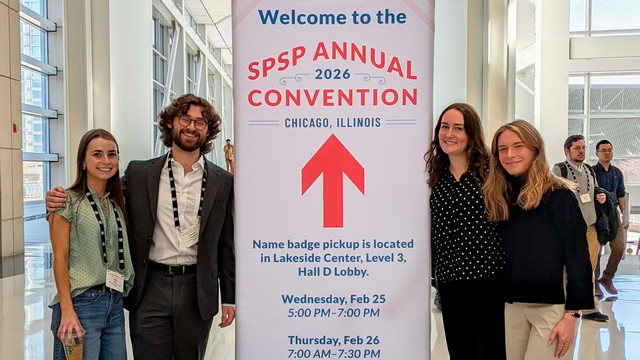
University of Richmond students presented their leadership and psychology research at the 2026 Society for Personality and Social Psychology Convention in Chicago.


A UR alum, Turner double majored in mathematics and music and is a talented vocalist who appeared on The Masked Singer.
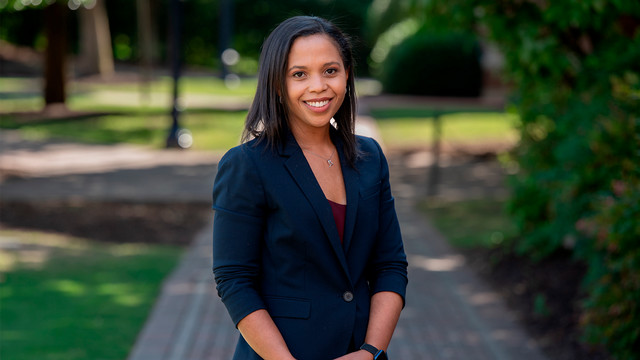

Sandra Peart, dean of the Jepson School of Leadership Studies and E. Claiborne Robins Distinguished Professor in Leadership Studies, co-published "The Importance of Approbation in The Wealth of Nations" in The Independent Review.

Lauren Henley, assistant professor of leadership studies, published Inquisition for Blood: The Making of a Black Female Serial Killer in the Jim Crow South with LSU Press.

Kristin M.S. Bezio, professor of leadership studies and Jepson School associate dean of academic affairs, published Shakespeare and Identity in a Divided World with Routledge.

Volha Chykina was promoted to associate professor of leadership studies. She researches how leadership and politics shape education in the United States and abroad. Her scholarship examines educational inequalities, academic freedom, education policy, and comparative and international education.


Kazi ASM Nurul Huda, Cmelikova Visiting International Scholar in Leadership and Ethics at the Jepson School of Leadership Studies, authored this piece.

Sandra Peart, dean of the Jepson School of Leadership Studies and an expert on the history of economic thought, is interviewed.

Sandra Peart, dean of the Jepson School of Leadership Studies, is interviewed. Peart is a well-known expert on the history of economic thought.

David Wilkins, leadership studies professor and member of the Lumbee Nation of North Carolina, is quoted.